

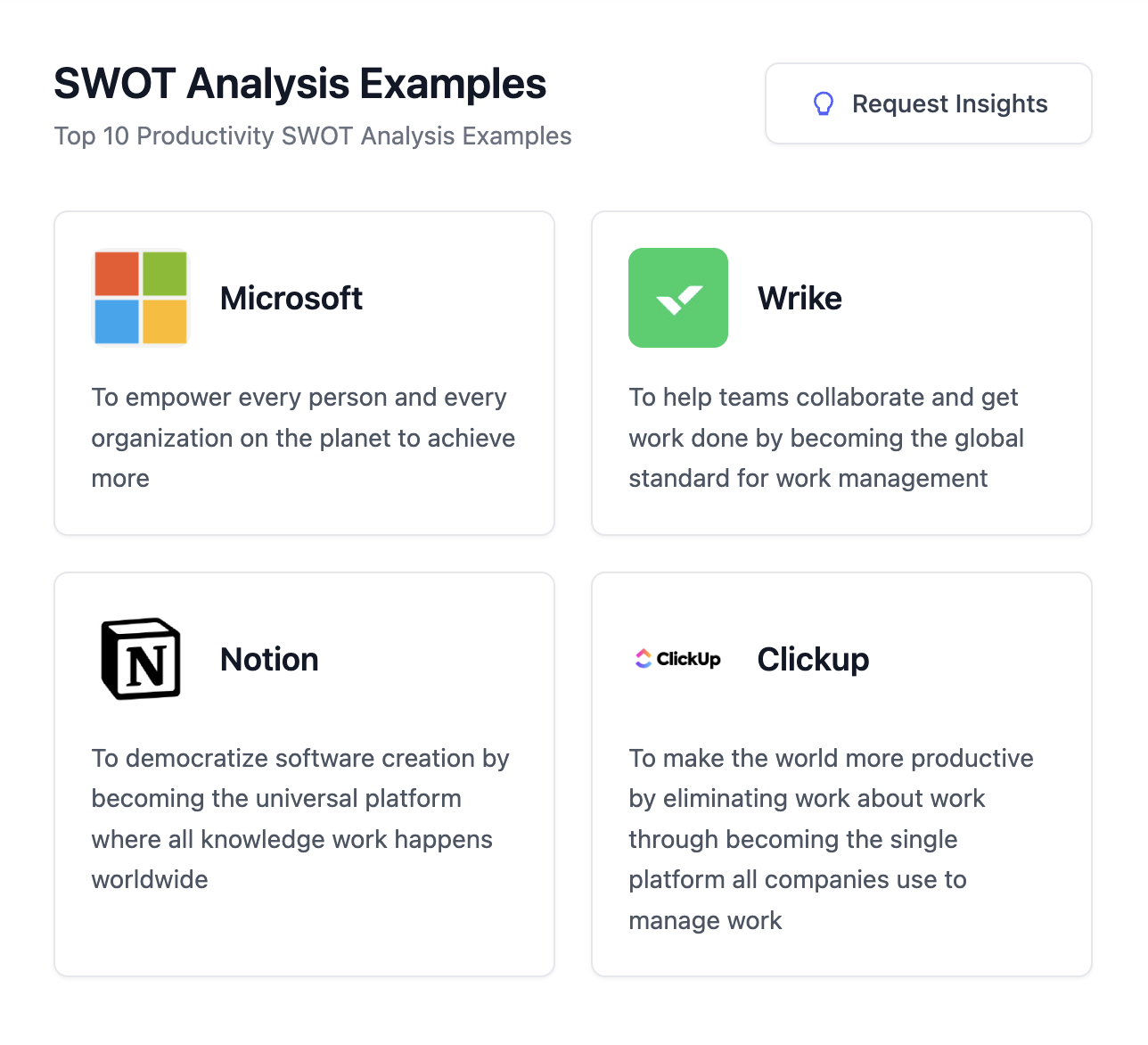
Key Findings from Our Productivity Tools SWOT Analysis
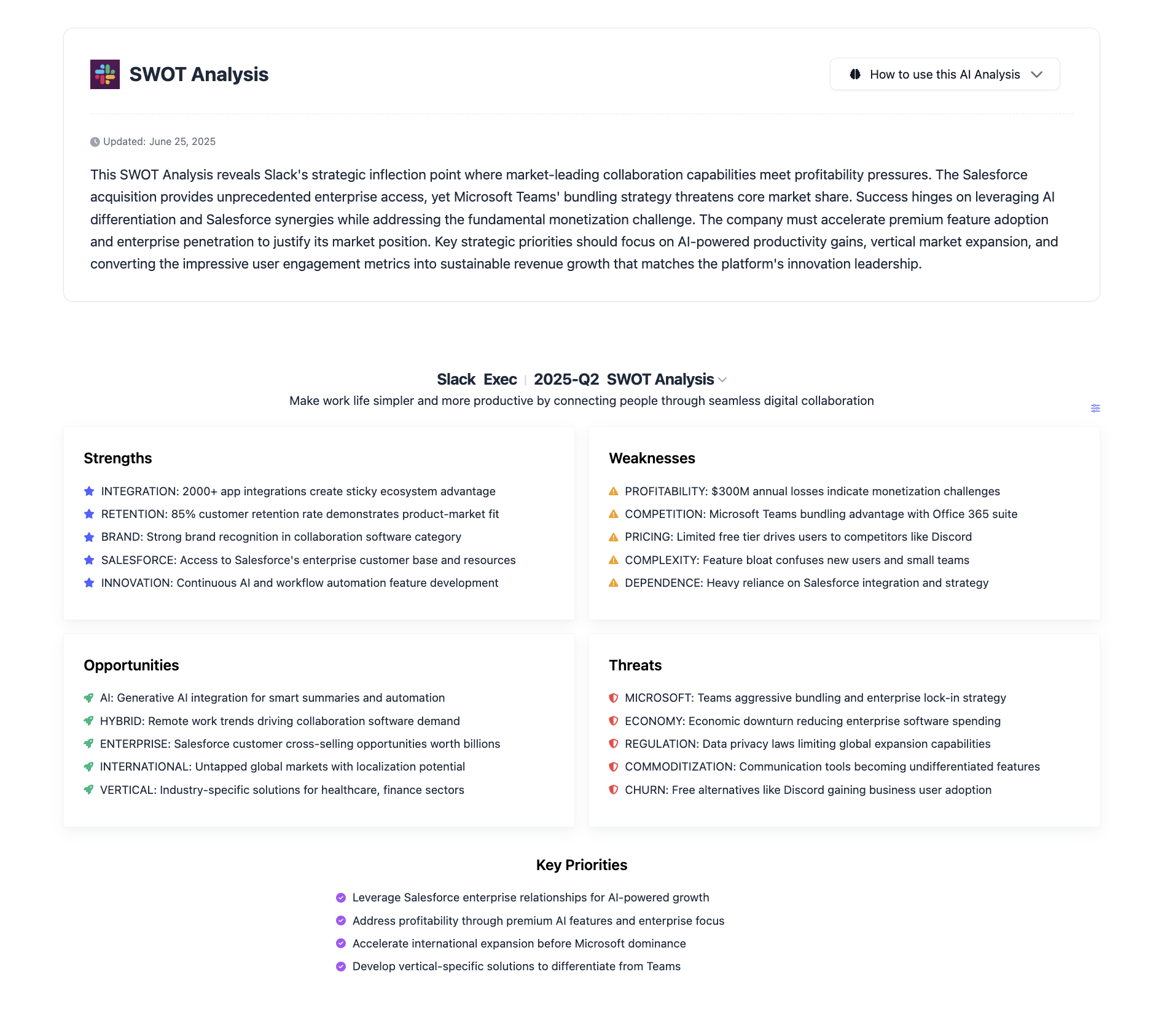
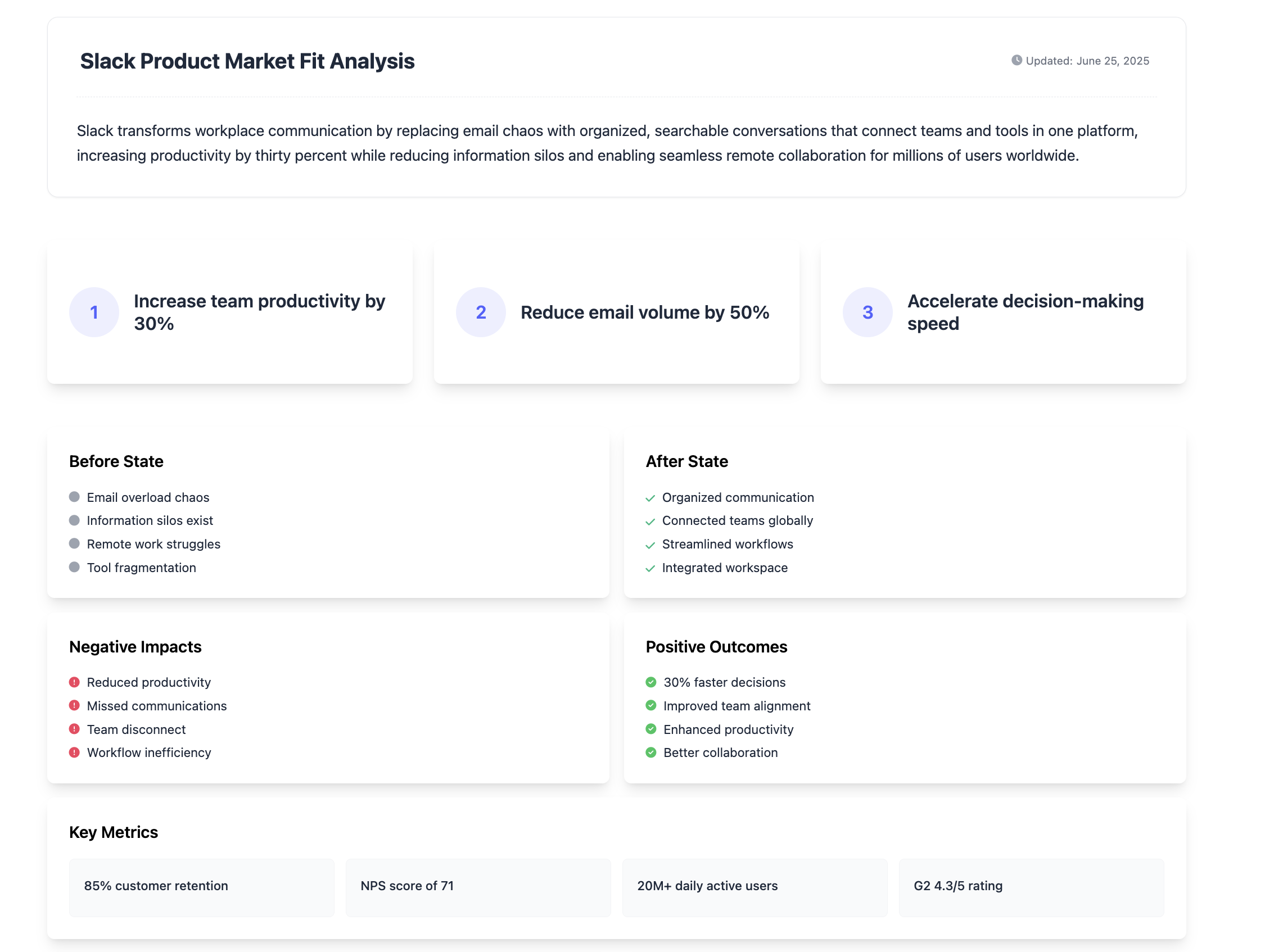
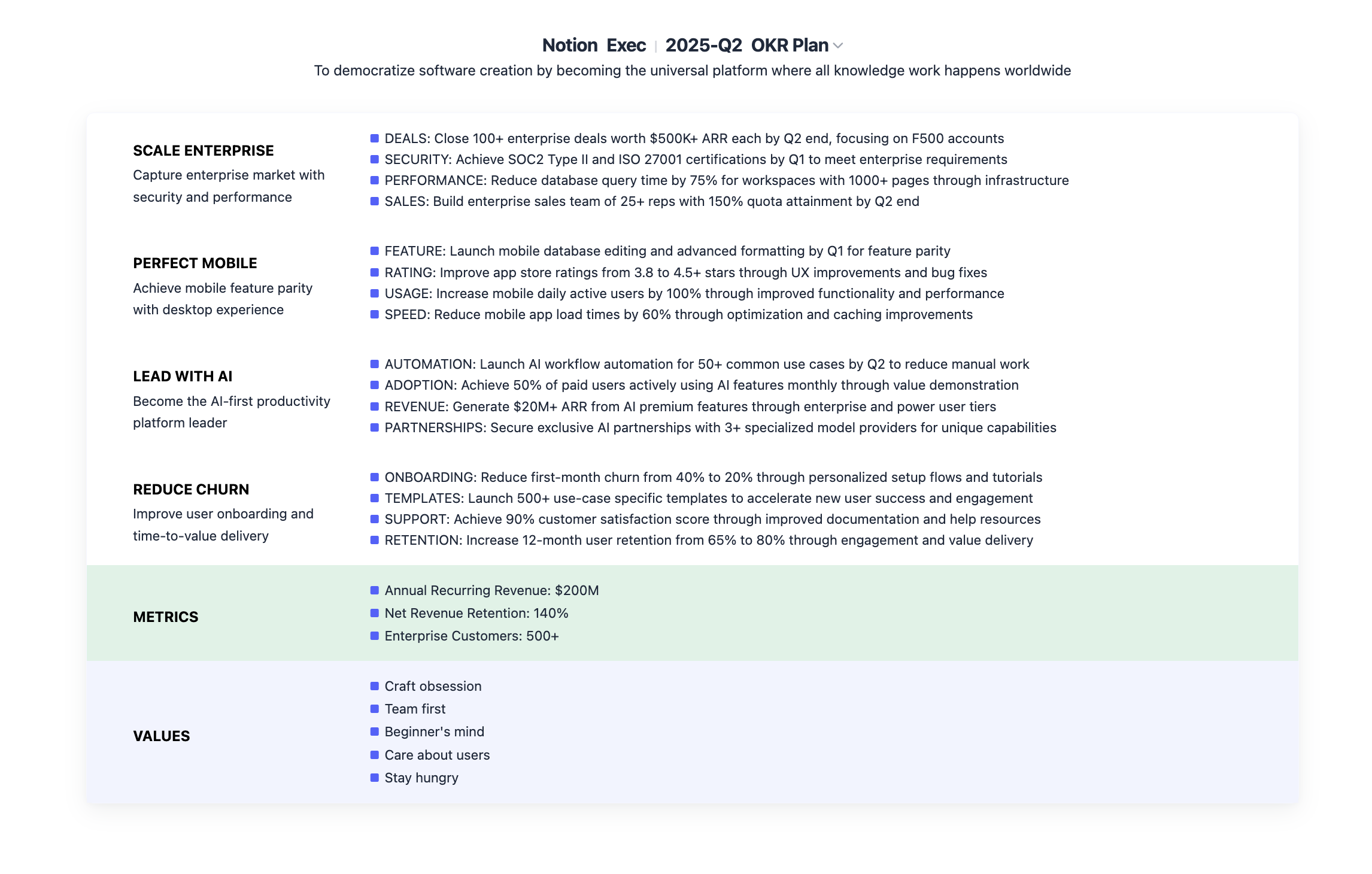
SWOT Analysis insights (Team Dashboard, SWOT Analysis, OKR Plan, Retrospective, Product Market Fit, Business Model Analysis) performed by SWOT Analysis on the Top 10 Productivity Platforms:
- Asana SWOT Analysis
- Notion SWOT Analysis
- Slack SWOT Analysis
- Miro SWOT Analysis
- Microsoft Teams SWOT Analysis
- Trello SWOT Analysis
- Clickup SWOT Analysis
- Monday.com SWOT Analysis
- Wrike SWOT Analysis
- Jira SWOT Analysis
Strongest Overall Performers
- Notion: Exceptional versatility and customization capabilities
- Microsoft Teams: Unmatched enterprise integration ecosystem
- ClickUp: Comprehensive feature set at competitive pricing
Emerging Opportunities
- AI integration represents the biggest growth opportunity across all platforms
- Remote work trends favor tools with superior collaboration features
- Mobile-first productivity solutions gaining traction
Industry-Wide Threats
- Market saturation creating pricing pressures
- Security concerns driving enterprise tool requirements
- User experience complexity as feature sets expand
Strategic Recommendations Based on SWOT Analysis
For Small Teams (1-10 people)
- Primary Choice: Notion for versatility or Asana for simplicity
- Budget Option: ClickUp for comprehensive features
For Medium Businesses (10-100 people)
- Primary Choice: Monday.com for visual management or ClickUp for customization
- Communication Focus: Slack with project management integration
For Large Enterprises (100+ people)
- Primary Choice: Microsoft Teams for ecosystem integration
- Specialized Needs: Jira for development teams, Wrike for complex project management
Future Trends Impacting Productivity Tool SWOT Analysis
Technology Integration Opportunities
- AI and machine learning automation
- Advanced analytics and predictive insights
- Enhanced mobile and offline capabilities
Market Threats to Monitor
- Privacy and data security regulations
- Economic factors affecting software spending
- Open-source alternative development
Methodology: How We Conducted This SWOT Analysis
Our productivity tools SWOT analysis incorporated multiple evaluation criteria including feature analysis, user feedback review, market positioning assessment, financial stability evaluation, and competitive landscape analysis. We examined over 500 user reviews, analyzed pricing structures, and evaluated integration capabilities across all platforms.
Conclusion: Choosing the Right Productivity Tool Using SWOT Analysis
The optimal productivity tool selection depends on your organization's specific strengths, weaknesses, opportunities, and threats. Our SWOT analysis reveals that no single tool dominates across all categories, making strategic fit more important than feature checklists.
Key Takeaways:
- Assess your team's technical capabilities before choosing highly customizable tools
- Consider long-term scalability and integration requirements
- Evaluate total cost of ownership, including training and implementation
- Prioritize tools that align with your industry's specific workflow patterns
Use this SWOT analysis framework to make data-driven decisions about your productivity tool investment and ensure strategic alignment with your business objectives.
